



Libido is a term used to describe sexual desire, or the motivation to engage in sexual activities. It can be influenced in multiple ways, and is affected by physiological, psychological, social, and emotional factors. Well-being across these different areas is especially relevant, because libido is not shaped by only 1 aspect of health or daily life. Additionally, changes in desire can feel personal, but they are often connected to a broader mix of body, mind, relationships, emotions, and overall well-being. When libido is low, that experience may reflect challenges or changes in 1 or more of these areas rather than a single cause. If you experience low libido, you are definitely not alone. Having a low libido is very common, and many people experience periods in which sexual desire or motivation is lower than usual.
Article written by: Anna Lindfors
Edited by: Olli Sovijärvi
Introduction
For example, in Finland 66% of women and 40% of men have experienced low libido. In the US prevalence of Hypoactive Sexual Desire Disorder (HSDD), which includes low libido, ranges from 26,7% for premenopausal women to 52,4% of menopausal women. Similarly, for men aged 16-59 prevalence of HSDD is approximately 25%, and for older men, it rises to 41%. Needless to say, these numbers indicate that low libido is not only globally prevalent but endemic and increasing throughout the lifespan.
Common causes for low libido include:
- Chronic stress
- Hormonal imbalance
- Hormonal birth control
- Poor self-esteem/body image
- Mood disorders (and their medication)
- Aging
- Certain medications
- Difficulties in relationships
- Lack of exercise
Hence methods for promoting healthy levels of libido are often multimodal i.e., take into account various lifestyle factors and dimensions of wellbeing. This article covers eight (8) natural ways to support libido:
EAT APHRODISIACS
Aphrodisiacs are foods named after Aphrodite, the goddess of love, and aphrodisiacs can support sexual desire and increase libido in various ways.
Aphrodisiacs are often discussed as foods that provide specific nutrients or compounds linked with sexual wellness and desire. In this list, aphrodisiacs include plant foods, seafood, meats and chocolate. Aphrodisiac examples include maca root, oysters for zinc, high protein meats for l-arginine and carnitine, salmon for Omega-3, apples for quercetin, red grapes for quercetin, and dark chocolate for phenylethylamine and serotonin. Aphrodisiacs therefore refer to a range of foods rather than a single ingredient, and aphrodisiacs may support libido through different nutritional components already present in everyday foods.
- Maca root
- Oysters (zinc)
- High protein meats (l-arginine & carnitine)
- Salmon (Omega-3)
- Apples (quercetin)
- Red grapes (quercetin)
- Dark chocolate (phenylethylamine and serotonin)

EXERCISE REGULARLY
Exercise is a form of physical activity that boosts blood circulation, raises testosterone levels and releases 'feel good' hormones, for example endorphins, dopamine, and serotonin. These factors are important for sexual function and desire, which is why regular exercise can boost libido. However, excessive endurance training can, in fact, lead to decreased libido. Hence, balance is key here as well.
Additionally, exercise does not only have physiological libido-boosting effects, but exercise also appears to have psychological benefits. In one study, men undergoing Androgen Deprivation Therapy, ADT, for prostate cancer reported challenges with body image, perceived masculinity, romantic relationships, libido, and engagement in sexual activities. Among other complementary methods, for example, exercise in a group setting with peer support contributed to the acceptance of changes in libido and engagement in sexual activities resulting from illness. This, in turn, resulted in enhanced sexual wellbeing.
BALANCE STRESS
Stress balance refers to finding suitable ways to optimize stress, because high levels of the stress hormone cortisol are associated with decreased sexual response, such as arousal, and decreased libido.
This association is described as especially relevant when stress becomes chronic. In other words, when cortisol remains high over time, sexual response and sexual desire may be lower. The same copy also notes the reverse association: engaging in sexual activities is associated with decreased levels of cortisol. Additionally, this helps explain why stress and libido are often discussed together in the same context.
Because of these links, finding suitable ways to optimize stress can support one’s libido. The method mentioned below is presented as one way to approach stress optimization, based on the idea that lowering or better managing stress may align with healthier cortisol patterns and sexual well-being.
ENJOY YOURSELF
Self-pleasure (i.e., solo sex) can both relax and enhance one’s (sexual) self-esteem. In addition, it is a good way to get to know one’s subjective sexuality (i.e., one’s personal sexuality) and explore one’s preferences (e.g., fantasies) in a safe way. In fact, becoming more tuned to one’s body and sexual response can enhance both perceived and experienced sexual pleasure. Another benefit of self-pleasure is that engaging in sexual activities on a regular basis (and experienced pleasure in response to that) can promote sexual desire. Hence self-pleasure is a great method for boosting libido and overall sexual satisfaction!
DO BREATHWORK
The importance of breathwork in enhancing sexual desire, connectedness, and pleasure was already discussed 2000 years ago by the ancient Taoists in China. Breathing is an effective way to impact the autonomic nervous system either via activation (sympathetic nervous system) or relaxation (parasympathetic nervous system). State of arousal is connected to the state of breathing i.e., when you are sexually stimulated your breathing becomes faster. But this goes the other way as well: faster breathing can increase your state of arousal. Then again, deep breathing is an effective way to activate the parasympathetic nervous system and therefore a method for relaxation. Hence, breathwork is definitely a method worth exploring when the goal is to support libido.
PRACTICE MINDFUL PRESENCE
Mindful presence is a daily practice of being present with yourself and consciously connecting with your body, which may support sexual wellness and facilitate tantric connections with yourself and others. For example, did you know that orgasm and meditation can have similar effects on the brain, as both can increase blood flow in the prefrontal cortex.
Further support for mindfulness practice and libido comes from similar neuroendocrine effects, including the release of oxytocin, “the love hormone.” One study found an association between mindfulness and perceived sexual arousal. Those who were more aware of their emotions and sensations reported more arousal in response to sexual stimuli, and oxytocinergic responses measured from saliva were aligned with both perceived mindfulness and arousal. Additionally, one study provided preliminary evidence supporting a mindfulness-based psychological intervention for women with Sexual Arousal Disorder in promoting sexual desire and arousal.
OPTIMIZE SLEEP
The importance of sleep for any area of wellbeing cannot be overstated. When it comes to libido, restorative sleep is especially important as poor sleep is associated with low libido. Engaging in sexual activities is probably the last thing on your mind when you are sleep-deprived. For example, menopausal women, among whom low libido is the highest, suffer from poor sleep in addition to other hormonal symptoms which could further decrease libido. In contrast, adequate sleep quality can support one’s wellbeing and ability to ‘cope’ with symptoms associated with menopause and support libido. In men, high-quality sleep is positively correlated with sexual function. In contrast, poor sleep quality is associated with erectile dysfunction.
It appears that, in particular, the effects of sleep on libido could be via the neuroendocrine system. During sleep, the body releases testosterone, which is a key sex hormone for sexual function and desire. Hence, poor sleep or decreased sleep quality is associated with lower levels of circulating testosterone in the bloodstream. Levels of testosterone are linked to high/low libido, which could provide insight into the connection between sleep quality and libido. All in all, optimizing sleep quality can be beneficial for boosting libido in addition to its other benefits for overall wellbeing.
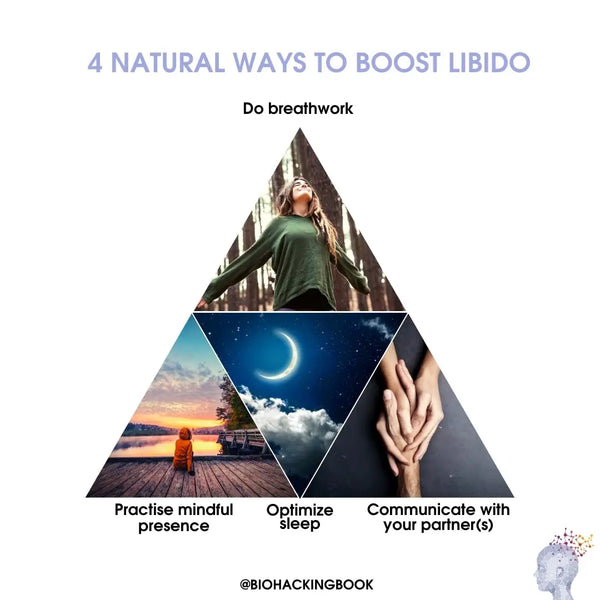
COMMUNICATE WITH YOUR PARTNER
Communication is key in any relationship, but in romantic ones, it can support libido and engagement in sexual activities. It is common to have mismatching libidos in a relationship, which is why communicating one’s needs and desires is key as well as giving one’s partner a safe space to express their feelings.
Discussing your libido, or not to mention the disparity existing between sexual desire experienced by your partner, might feel challenging at first but studies suggest that constructive communication can, in fact, support your (and your partner's) libido. It is definitely worth exploring open communication in intimate relationships, not only to boost libido or sexual satisfaction but overall wellbeing in the relationship.
N.B. changes in libido throughout various life situations are normal – sometimes one’s libido is higher, sometimes lower. However, if low libido becomes chronic or starts to disrupt one’s life it is advisable to consult a specialist to get to the root cause of the problem.
How do you naturally support libido? Tell us in the comments!
Related guide: The vagus nerve and stress
